
Land Rights & Forest Justice
Turning legal rights into real access for tribal forest communities
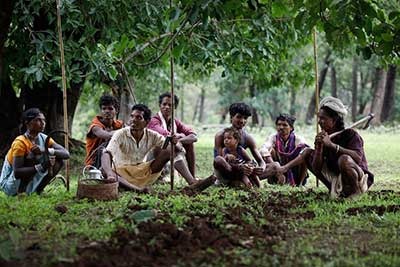
India’s Forest Rights Act (2006) recognizes tribal and forest dwellers’ rights to land, trees, and forest resources — a correction to centuries of exclusion and ecological marginalization. But language barriers, lack of documentation, and weak implementation mean many families are still unable to claim what the law entitles them to.
When rights are denied, families are pushed off their land, livelihoods collapse, and forests suffer from unmanaged use and loss of customary stewardship.
At Tribal Vikas, we work to bridge the gap between legal promise and lived reality by:
- Translating forest rights into accessible tools— multilingual toolkits explain the Forest Rights Act in indigenous languages so communities understand their entitlements.
- Supporting land claims on the ground — organizing assisted camps that help tribal families prepare evidence and file claims through legally valid processes.
- Training local youth in documentation — equip youth to record land use histories, customary practices, and oral testimony needed for claims.
- Strengthening local governance — work with Gram Sabhas and community leaders to reinforce participatory decision-making and lawful authority.
Just as digital literacy opens doors to information and opportunity, securing land and forest rights ensures economic security, cultural continuity, and ecological stewardship. This work strengthens tribal agency while protecting forests through community stewardship, not displacement.